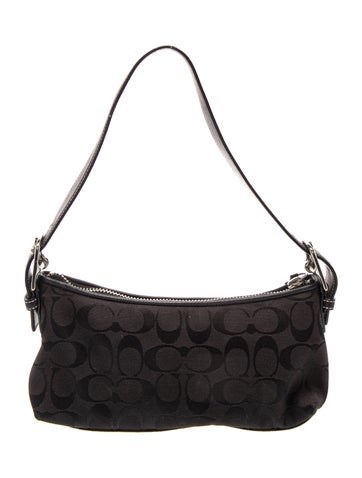
Buy vintage Coach when you want an older leather bag with a discontinued shape and you are willing to inspect its condition closely. Start with the model family and approximate era, then compare dimensions, carry method, repairs, and seller documentation. A creed or number can support that research, but it cannot authenticate a bag on its own.
What “vintage Coach” means in this guide
Coach began in 1941 as a Manhattan leather-goods workshop. Bonnie Cashin served as its first lead designer from 1961 to 1974, a documented period associated with practical shoulder bags, kisslock pockets, turnlocks, and bold hardware. Later decades brought the leather crossbodies, satchels, and compact shoulder bags that now dominate vintage searches.
There is no official universal age cutoff. Here, vintage means an older Coach bag from a period whose design, materials, sourcing, and construction differ meaningfully from current production—usually a bag made before the mid-2000s. That keeps a current Dinky or Hamptons reissue separate from an older original even when both share an archival name.
- What shoppers encounter
- Early leather goods plus Cashin-era kisslocks, turnlocks, and distinctive utility details
- Why it matters
- Historic importance can raise collector interest, so documentation and restoration history matter.
- What shoppers encounter
- Dinky, Classic Pouch, Saddle Pouch, and Station families
- Why it matters
- Simple leather construction makes shape, strap condition, and edge wear easy to see.
- What shoppers encounter
- Court, Willis, Rambler’s Legacy, Ergo, and early Soho context
- Why it matters
- Many popular everyday shapes appear, alongside wider manufacturing-origin variation.
- What shoppers encounter
- Later Soho and Hamptons families, fabric variants, and shorter shoulder shapes
- Why it matters
- Material and subfamily differences become essential when comparing wear and capacity.
- What shoppers encounter
- Coach Originals and other reissued archival silhouettes
- Why it matters
- A reissue may look old but has current materials, condition, and product support.
How to estimate an era without a serial-number decoder
Begin with the bag you can see, not a code in isolation. Compare its silhouette, closure, pockets, lining, strap geometry, dimensions, and country-of-origin mark with a documented Coach page, catalog reference, or museum record. Then use the creed wording and style number, when present, to refine the search.
Coach's numbering practices changed. Older all-numeric codes do not work like later combinations that can include style and production information, and sellers sometimes copy numbers incorrectly. Even Coach's own vintage pages give different introduction years for some Court, Rambler’s Legacy, and Soho variants, so family-level dating is more defensible than a precise year based on one field.
- What it can tell you
- A likely design lineage and broad period
- Limit
- Families span sizes, revisions, and modern reissues.
- What it can tell you
- Manufacturing or style context
- Limit
- Formats changed and not every bag follows one pattern.
- What it can tell you
- A lead for catalog and family research
- Limit
- It is not a universal date code or authentication result.
- What it can tell you
- Context within Coach's changing sourcing history
- Limit
- The same broad collector market includes several countries.
- What it can tell you
- Whether the construction fits a family or period
- Limit
- Repairs, re-dyeing, and reissues can change these details.
- What it can tell you
- Whether the specific bag matches the description
- Limit
- Missing or unclear photos leave important condition questions open.
Photos and facts to request
Ask for straight-on photos of the front and back, both sides, the base and corners, the complete interior, creed area, zipper or turnlock, strap ends, handle attachments, and every piece of hardware. Request actual width, height, depth, and strap drop rather than relying on a model name. The seller should also disclose odor, storage, cleaning, conditioning, re-dyeing, replacement parts, relining, and repairs.
The best vintage Coach families by use
The best family depends on what you carry and how you want the bag to sit. Court and Station are sensible first crossbodies; Willis adds space and a top handle; Ergo and Hamptons suit an underarm look; Dinky works when you carry very little. Soho is too broad to judge by its name alone because leather, patent, jacquard, flap, zip, and shoulder versions age differently.
- Best for
- Light daily or dressier use
- Carry and capacity
- Slim shoulder or crossbody proportions for a phone, small wallet, keys, and little else
- Watch for
- Edge rub, substituted straps or chains, and confusion with current reissues
- Best for
- A first compact vintage crossbody
- Carry and capacity
- Square body for a phone, wallet, keys, and a small sunglasses case
- Watch for
- Flattened corners, attachment wear, and missing straps
- Best for
- Comfortable everyday essentials
- Carry and capacity
- Compact flap crossbody with more depth than its front view suggests
- Watch for
- Flap creasing, strap wear, and stretched outside pocket
- Best for
- More room and flexible carry
- Carry and capacity
- Structured satchel with top handle and detachable long strap
- Watch for
- Weight, handle stress, missing strap, and stretched back pocket
- Best for
- A softer casual crossbody
- Carry and capacity
- Rounded flap with medium essentials capacity
- Watch for
- Curved-flap creasing and confusion with similar families
- Best for
- A 1990s underarm shape
- Carry and capacity
- Short-drop shoulder bag; zip or flap versions vary
- Watch for
- Shoulder slip, zipper wear, short coat clearance, and trend-driven asks
- Best for
- A broad 1990s–2000s range
- Carry and capacity
- Shoulder, flap, handle, and zip formats
- Watch for
- Patent, jacquard, and leather need different condition checks
- Best for
- A narrow Y2K hobo
- Carry and capacity
- Shoulder carry for a phone, compact wallet, keys, and slim extras
- Watch for
- Short handle drop and limited depth
Court, Station, or Willis for a first bag?
Choose Court when you want a compact crossbody that still has useful depth. Choose Station for a neat square profile and a simple errands bag. Choose Willis when a small notebook, full wallet, or daily pouch makes the smaller crossbodies feel cramped; its top handle is useful, but the structured body is heavier.
Ergo, Soho, and Hamptons for shoulder carry
Ergo is the clearest choice for a curved 1990s underarm silhouette, while Hamptons gives you a narrower early-2000s hobo. Soho covers too many designs for a family-wide verdict, so match the exact closure, material, lining, and dimensions before comparing prices.
What fits and how the popular shapes carry
Vintage leather softens, stretches, and loses structure, so dimensions are only the starting point. Depth governs bulky items, the flap reduces usable height, and a short shoulder drop may not clear a winter coat. Ask for measurements taken from the actual bag and compare them with what you carry.
- Documented reference dimensions
- About 9.25 × 7.5 × 3.75 in
- Practical load
- Phone, compact wallet, keys, sunglasses, and small extras
- Carry note
- Long-strap crossbody; not a work or bottle bag
- Documented reference dimensions
- About 10.5 × 10 × 3.5 in; 22 in strap drop
- Practical load
- Phone, full wallet, keys, sunglasses, small notebook, and a few extras
- Carry note
- Top handle plus detachable long strap; boxier and heavier
- Documented reference dimensions
- About 9 × 9 × 2.5 in; roughly 23.5–24 in drop
- Practical load
- Phone, wallet, keys, and a smaller sunglasses case
- Carry note
- Easy crossbody shape, but shallow for bulky pouches
- Documented reference dimensions
- About 9.5 × 8.25 × 3.5 in; 24 in drop
- Practical load
- Phone, medium wallet, keys, sunglasses, and a small pouch
- Carry note
- Rounded flap can reduce usable room as the bag softens
- Documented reference dimensions
- About 12–12.25 in wide, 8–9 in high, around 3 in deep
- Practical load
- Phone, wallet, keys, slim notebook, and beauty pouch
- Carry note
- Short 8–8.5 in drop favors underarm carry
- Documented reference dimensions
- About 10.5 × 8.5 × 2.5 in; 10 in handle drop
- Practical load
- Large phone, compact wallet or card case, keys, and slim extras
- Carry note
- Narrow, shoulder-first shape; poor fit for a bottle or bulky notebook
Do not force capacity by overstuffing. A loaded flap can pull at the turnlock, a packed zip bag strains the zipper tape, and a heavy Willis puts more stress on its handle and strap attachments. If your daily load sits at the limit, move up to the roomier family.
Condition, repairs, and alterations that change the purchase
Light scuffs, creasing, softened shape, and an even patina are mainly cosmetic when the leather remains flexible and the bag functions normally. Cracking at folds or strap ends, torn piping, split seams, failing zipper tape, loose handle anchors, heavy odor, sticky coatings, and severe lining damage can turn an inexpensive listing into a difficult repair.
- Likely effect
- Mostly cosmetic
- Buyer action
- Compare with similar worn examples and decide whether you like the patina.
- Likely effect
- Possible structural failure
- Buyer action
- Request close photos with the leather gently flexed; budget for professional assessment.
- Likely effect
- Reduced completeness and changed usability
- Buyer action
- Confirm replacement length and hardware; price against similarly incomplete bags.
- Likely effect
- Altered surface and harder comparison
- Buyer action
- Ask who did the work, what products were used, and whether color transfers or stiffness remain.
- Likely effect
- Material alteration to the original bag
- Buyer action
- Require clear disclosure and judge the work on function, not originality claims.
- Likely effect
- Can persist despite cleaning
- Buyer action
- Only buy with a return option if odor sensitivity matters.
- Likely effect
- Repair need rather than ordinary wear
- Buyer action
- Get a repair opinion before treating the asking price as a bargain.
Coach says many core leathers can be cleaned and moisturized, and its stores may offer cleaning and conditioning. Its repair service assesses repair work but does not remove stains or fully refurbish leather. On an older bag, begin with the least aggressive care and avoid soaking, heat, household oils, or an undisclosed re-dye.
How to judge a fair asking price
There is no responsible sitewide price range for vintage Coach. The category spans six decades, many materials, small pouches, workhorse crossbodies, rare Cashin-era pieces, restored bags, and modern products mislabeled as vintage. Compare the exact family or close subfamily, then adjust for size, material, condition, completeness, alterations, seller protection, taxes, shipping, and return terms.
Separate asking prices from completed sales. A high listing can remain unsold for months, while an auction result may reflect poor photos or a narrow audience. Collector importance can lift a documented Cashin-era bag, but age alone does not make worn leather, missing parts, or uncertain restoration more valuable.
- Why it moves the decision
- A Soho patent shoulder bag is not comparable with a leather Soho flap, even when both listings say Soho.
- Why it moves the decision
- Flexible leather and sound attachments matter more than a glossy photograph.
- Why it moves the decision
- The correct long strap can determine whether a Court, Station, or Willis works as intended.
- Why it moves the decision
- Good work may extend use, but alterations reduce direct comparability with untouched bags.
- Why it moves the decision
- Clear photos, measurements, and written disclosure reduce the risk hidden in a low ask.
- Why it moves the decision
- Shipping, sales tax, duties, and marketplace fees can erase an apparent bargain.
- Why it moves the decision
- A return path is valuable when odor, color, and leather feel cannot be judged on screen.
For one narrow current reference, eight standard-size Dinky asking prices in U.S. reseller listings we tracked on July 19, 2026 centered on a $334 median, with the middle half from $315.25 to $359.50. All eight came from one reseller, and the sample mixes seller condition labels, so it is a shopping snapshot rather than a Dinky valuation or a guide to vintage Coach generally.
Vintage Coach versus Coach Originals and (Re)Loved
A familiar model name does not tell you whether the bag is old. Coach Originals includes current interpretations of archival designs such as Dinky and Swinger, while Coach describes current Hamptons and Soho products through their earlier design history. Coach (Re)Loved separately sells restored, reimagined, and vintage pieces.
- Choose it when
- You want the period object, broken-in leather, discontinued proportions, or a specific origin and construction
- Trade-off
- More condition research, fewer predictable returns, and possible restoration uncertainty
- Choose it when
- You want an older bag with Coach's restoration disclosure and retail presentation
- Trade-off
- Limited selection and a price that may include the restoration and retail channel
- Choose it when
- You want the old shape with new condition, current materials, and simpler support
- Trade-off
- Details, dimensions, lining, or leather may differ from the older version
- Choose it when
- You want a current design below retail and can verify the exact style
- Trade-off
- It is preowned, not automatically vintage, despite an archival family name
Buy the older original for its history and particular construction. Buy the reissue when your real priority is the silhouette and you would rather avoid odor, brittle straps, altered finishes, and uncertain repair work.
A safer process before you pay
First, identify the likely family and decide whether its dimensions and carry method suit your routine. Second, place it in a broad era with several consistent details. Third, inspect the actual bag for structural wear and alterations. Finally, compare total cost and seller protection with close alternatives.
- What to confirm
- Crossbody, top handle, or shoulder; phone and wallet only, or notebook and daily pouch.
- What to confirm
- Silhouette, closure, pockets, dimensions, and a documented family reference.
- What to confirm
- Creed, style number, origin, leather, lining, and hardware considered together.
- What to confirm
- Corners, folds, strap ends, anchors, piping, seams, zipper, lining, and odor.
- What to confirm
- Cleaning, conditioning, dye, coating, replacement hardware, relining, or strap changes.
- What to confirm
- Same family, size, material, condition, completeness, and restoration history.
- What to confirm
- Ask, shipping, tax, duties, fees, repair needs, and return terms.
- What to confirm
- Save photos and the written description before checkout in case a dispute arises.
Walk away when a seller refuses basic photos, avoids direct questions about odor or restoration, uses stock images instead of the actual bag, or gives measurements that conflict with the photographs. A rare model name does not compensate for missing evidence.
Sources and further reading
Coach history and manufacturing context come from Coach's 2004 SEC filing. Current care, repair, restoration, and archive-revival distinctions are described by Coach Product Care, Coach Repairs, and Coach (Re)Loved.
The Bonnie Cashin period is supported by the Metropolitan Museum of Art's 1972 Coach shoulder-bag record and the UCLA Bonnie Cashin collection. Coach's own listings provide the family references used above: Court, Willis, Station, Rambler's Legacy, Ergo Small Zip, and Hamptons Hobo. Those pages support the reference dimensions and family context in the tables. Where Coach pages conflict, this guide gives a broad family period rather than one introduction year.
Frequently asked questions about vintage Coach bags
Frequently Asked Questions
Bottom line: buy the bag, not the date story
A good vintage Coach purchase starts with a useful model in sound condition. Court and Station suit compact crossbody carry, Willis adds capacity and a top handle, and Ergo or Hamptons answer the underarm-shoulder look. Once the family fits your life, use several details to estimate its era, insist on disclosure of repairs and alterations, and pay for the condition you can document.