The Hermès Massai is one of those bags that makes more sense once you stop asking whether it is famous and start asking how it actually carries. It is tall, zipped, soft, and quieter than most of the bags shoppers use to signal that they bought Hermès on purpose.
That low-profile status is exactly why the bag keeps showing up in collector discussions. The shape is slim enough to sit close under the arm, the zipper makes it feel more secure than many open-top Hermès casual bags, and the resale market stays far below quota-bag territory. The catch is that the Massai name covers two experiences: the original deeper version and the easier daily version called the Massai Cut.
What the Massai Is
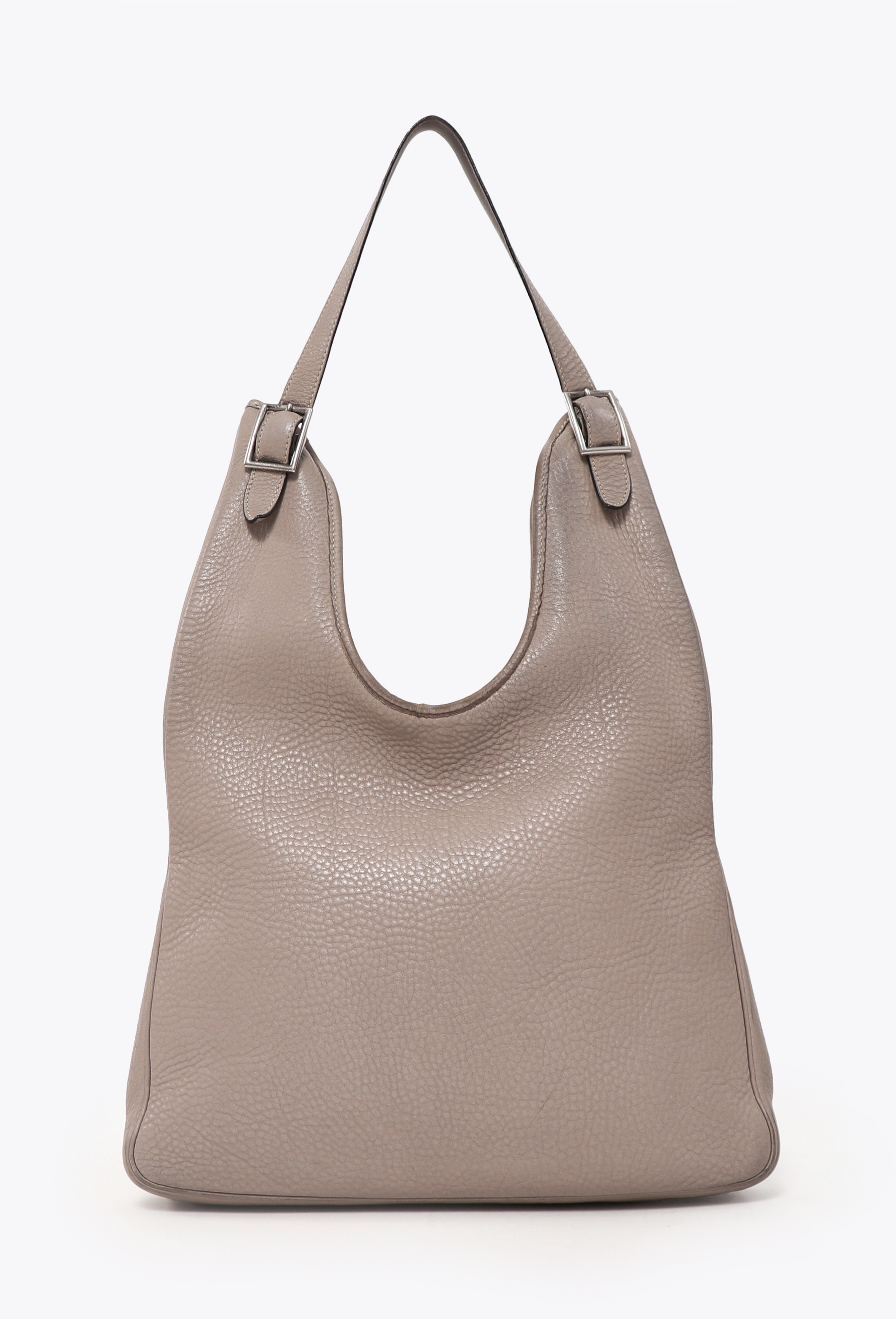
At the shopper level, the definition is straightforward. The Massai is a tall zip-top shoulder bag that usually hangs in a clean vertical line rather than spreading outward like a tote or bucket bag. Many documented examples come with two straps, which is why the same model can show up in resale descriptions as a shoulder bag, messenger, or crossbody-style bag.
In February 2026, Vogue France called the Massai a supple, conceptual Hermès bag launched at the end of the 1990s and still appealing to collectors. That framing fits what the bag looks like now: it reads more like archive minimalism than like a flashy status purchase.
You will also see the name written as Massaï in French and resale contexts. It is the same bag, not a separate line, and it is worth keeping both spellings in mind when you search.
The Margiela question
This is the point worth keeping clean, because a lot of resale copy gets sloppy here. Vogue France said the bag's clean lines evoke the Margiela era at Hermès, but it also said the model is not signed by Martin Margiela. That is a much more careful claim than the lazy version that says he designed it.
In practice, that means you can fairly describe the bag as sitting in that quiet late-1990s or early-2000s lane without overstating designer attribution. For a shopper, the important part is the look: minimal hardware, a long body, and a zipper instead of a flap.
Is the Massai Still Made?
For buying purposes, treat the Massai and Massai Cut as archive or secondary-market bags. Today they turn up at auction houses and on resale platforms, not in Hermès' catalog, and Hermès has no current product page for either name.
Hermès has not announced that the line ended, but a June 2025 reseller guide lists both the Massai Bag and the Massai Cut Bag as discontinued, and the bags for sale today are pre-owned. The latest sign of the Massai Cut at retail is from early 2010, when shoppers discussed it on Hermès' U.S. site and in stores.
Massai vs Massai Cut
This is the split that matters most. The original Massai is the bag owners praise for its slouch and complain about for its depth. The Massai Cut is the version people bring up when they like the idea of the Massai but hate digging through one deep interior.
- Documented Dimensions
- 17 in H x 12.6 in W x 2.5 in D
- Carry
- Shoulder, often with extra strap
- What Buyers Usually Notice
- Tall and slim, but still deep enough to feel cavernous when full
- Documented Dimensions
- Often discussed as a daily shoulder size
- Carry
- Shoulder first
- What Buyers Usually Notice
- Real owner reports say it can hold more than the silhouette suggests
- Documented Dimensions
- 13 in base x 10.75 in H x 2 in W
- Carry
- Shoulder, with hands-free potential if the long strap is included
- What Buyers Usually Notice
- The easier daily bag if you dislike rummaging
- Documented Dimensions
- 15.8 in x 9 in x 3.5 in
- Carry
- Shoulder or messenger depending on strap setup
- What Buyers Usually Notice
- Keeps the Cut layout, but gives back some of the travel capacity
The community language is unusually consistent on this point. People call the original Massai a black hole or cavern, while the Cut is the version that removes most of that annoyance. That does not make the Cut objectively better. It makes it easier for buyers who carry a phone, keys, and small loose items instead of only larger pouches.
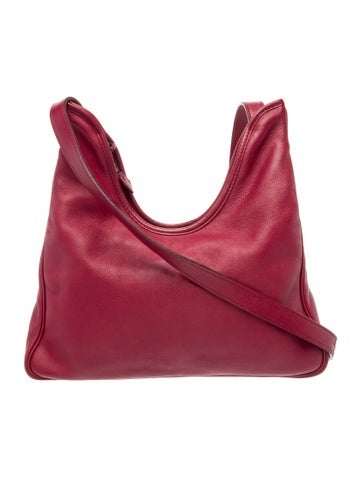
The strap situation matters here too. Sotheby's cataloging for a Massai 32 says the bag is accompanied by two straps. Older community captures of the Massai Cut 40 quote a 24-inch short strap and a 48-inch long strap. If a current listing shows only one strap, assume you are losing one of the bag's intended wear modes.
Construction, Lining, and Straps
The Massai is one of those Hermès bags where auction and resale descriptions are useful because they keep repeating the same basic build. That repetition does not guarantee every bag is identical, but it does give buyers a workable checklist.
- Closure: top zip opening, often described as double-zip on the Cut versions.
- Interior: beige fabric lining, frequently described as herringbone textile.
- Pocket: a zip pocket inside is one of the most consistent details across listings.
- Hardware: palladium-tone or palladium-plated is the most common listing language.
- Straps: many examples were sold with both a short and a long strap, but not every resale bag still has both.
What those details mean in daily use
The zipper is the feature owners praise most consistently. It makes the bag feel safer for commuting, easier for travel, and less likely to spill than the open-top casual Hermès bags people often compare it to. The downside is that the original Massai can still feel vague inside once smaller items sink below the zipper line.
The bag's long vertical body is also what creates the split reaction on comfort. If you like north-south bags that stay tucked in close and do not slide around, the Massai tends to work well. If you dislike tall bags on principle, the shape will not convert you just because it says Hermès.
Pricing and Market Reality
The Massai market only makes sense if you separate current asks from sold history. Live asks show what sellers want today. Sold pages show what buyers were actually willing to pay. On a quiet archive bag like this one, that gap can be wide because supply is thin and listing quality varies a lot.
- Sample
- 5 live listings we tracked, April 2026
- Observed Band
- $2,204-$4,661
- What It Means
- Median ask is about $3,158, but ask spread is wide because size and strap completeness are inconsistent
- Sample
- 2 live listings we tracked, April 2026
- Observed Band
- $1,800-$1,805
- What It Means
- Current asks sit just above the low-to-mid sold band documented on large resale platforms
- Sample
- Sold PM, 32, Cut 32, and Cut 40 bags
- Observed Band
- About $1,095-$1,695 for many Cut results; $1,345-$1,595 for PM and 32 examples
- What It Means
- Useful reality check against more ambitious live asks
- Sample
- Sotheby's Massai 32 estimate
- Observed Band
- $1,200-$1,800
- What It Means
- Directionally consistent with the quieter end of the resale market
The takeaway is not that every Massai should cost around $1,500. It is that this is a bag where sold history often looks much softer than the mood-board energy around the name. The original Massai can still push higher when the color, condition, and full strap set are right. But the Massai is not trading in the same universe as high-visibility Hermès evening pieces.
Current live asks also show why people keep calling the bag underrated. In April 2026, original Massai listings ran from just over $2.2k to about $4.7k, while current Massai Cut 32 asks sat around $1.8k. That is real money, but it is still a very different proposition from a Kelly Pochette or Constance Elan.
What It Fits and How It Wears
The original Massai gets most of its goodwill from comfort. Owners describe it as slouchy, easy under the arm, and close to the body in a way that feels relaxed rather than floppy. The zip is often called the feature that turns the bag from interesting archive piece into something people would actually travel with.
Capacity reality
- Massai PM owner report: iPad mini, makeup bag, another pouch, and a regular water bottle.
- Massai 32 dimensions: 17 inches high and only 2.5 inches deep, which explains why the bag feels tall and streamlined rather than boxy.
- Massai Cut shopping logic: buyers looking at the larger Cut sizes often want room for a jacket, notebook, bottle, wallet, phone, and charger.
Where the annoyance comes from
The same bag can feel secure and irritating for the same reason: the zipper sits at the top of a long body. That is great for keeping things in. It is less great when you are hunting for keys or earbuds at the bottom. This is the complaint that keeps pushing practical buyers toward the Massai Cut.
Weight reports are mixed, and the disagreement is easy to understand. A lightly packed PM in a softer leather can feel easy. A larger bag in heavier leather with a bottle and a charger inside can stop feeling elegant very quickly. The Massai is not a magic bag. It is a slim zip bag that rewards thoughtful packing.
Comparisons Shoppers Actually Search
Most Massai comparisons boil down to one question: are you shopping for a quiet zip shoulder bag, or are you actually shopping for a different kind of Hermès bag and only landed here because you like the understated look?
- Carry
- Shoulder, often with extra strap
- Closure
- Top zip
- Documented Size
- 17 in H x 12.6 in W x 2.5 in D
- Why People Cross-Shop It
- Quiet zip-top casual Hermès bag with a tall silhouette
- Carry
- Shoulder, with hands-free potential
- Closure
- Top zip
- Documented Size
- 13 in base x 10.75 in H x 2 in W
- Why People Cross-Shop It
- Same mood as the original, but easier to use daily
- Carry
- Hand carry
- Closure
- Kelly flap and sangles
- Documented Size
- About 22 x 12 x 6 cm
- Why People Cross-Shop It
- Mini icon with far higher visibility and far higher pricing
- Carry
- Hand carry
- Closure
- H closure
- Documented Size
- 11.4 in L x 5.9 in H x 1 in D
- Why People Cross-Shop It
- A real clutch, not a zip shoulder bag
- Carry
- Shoulder or crossbody
- Closure
- H clasp
- Documented Size
- 25 x 15 x 5 cm
- Why People Cross-Shop It
- Structured, hardware-forward alternative
- Carry
- Shoulder
- Closure
- Magnet flap
- Documented Size
- 21 x 46 x 10 cm
- Why People Cross-Shop It
- Current-production minimalist hobo outside Hermès
In plain English, the Massai sits at the quiet end of the comparison set. Kelly Pochette is the mini collector piece. Jige Elan is the clutch. Constance Elan is the structured strap bag with visible hardware. The Massai is the one for buyers who want Hermès in the room without making the bag do all the talking.
If you want a current-production zip shoulder bag instead of a resale-only search, the Evelyne is the closest practical comparison — it shares the close-to-the-body shoulder carry but has a snap tab instead of a zip and is still available at retail. Men who are browsing the quiet end of the Hermès catalog may also find the broader Hermès bags for men guide useful for context.
Buying Checklist
The Massai is not a bag where you should buy on vibe alone. Listings vary a lot in naming, size labels, and completeness, so the practical checks matter more than the romance of finding a late-1990s archive Hermès bag.
Confirm before you buy
- Both straps, or clear acknowledgment that one is missing
- Smooth zipper travel all the way across the top
- Interior fabric condition, especially along the pocket and zipper tape
- Whether the listing is really the original Massai or a Massai Cut
- Exact measurements if the seller uses PM, 32, 33, or 40 loosely
The Massai is probably wrong if...
- You hate north-south bags on principle
- You want instant access to small loose items
- You need guaranteed true crossbody wear from the start
- You mainly want the loudest possible Hermès status signal
- You prefer a structured bag with obvious compartments and external organization
Frequently Asked Questions
Related Hermès Guides
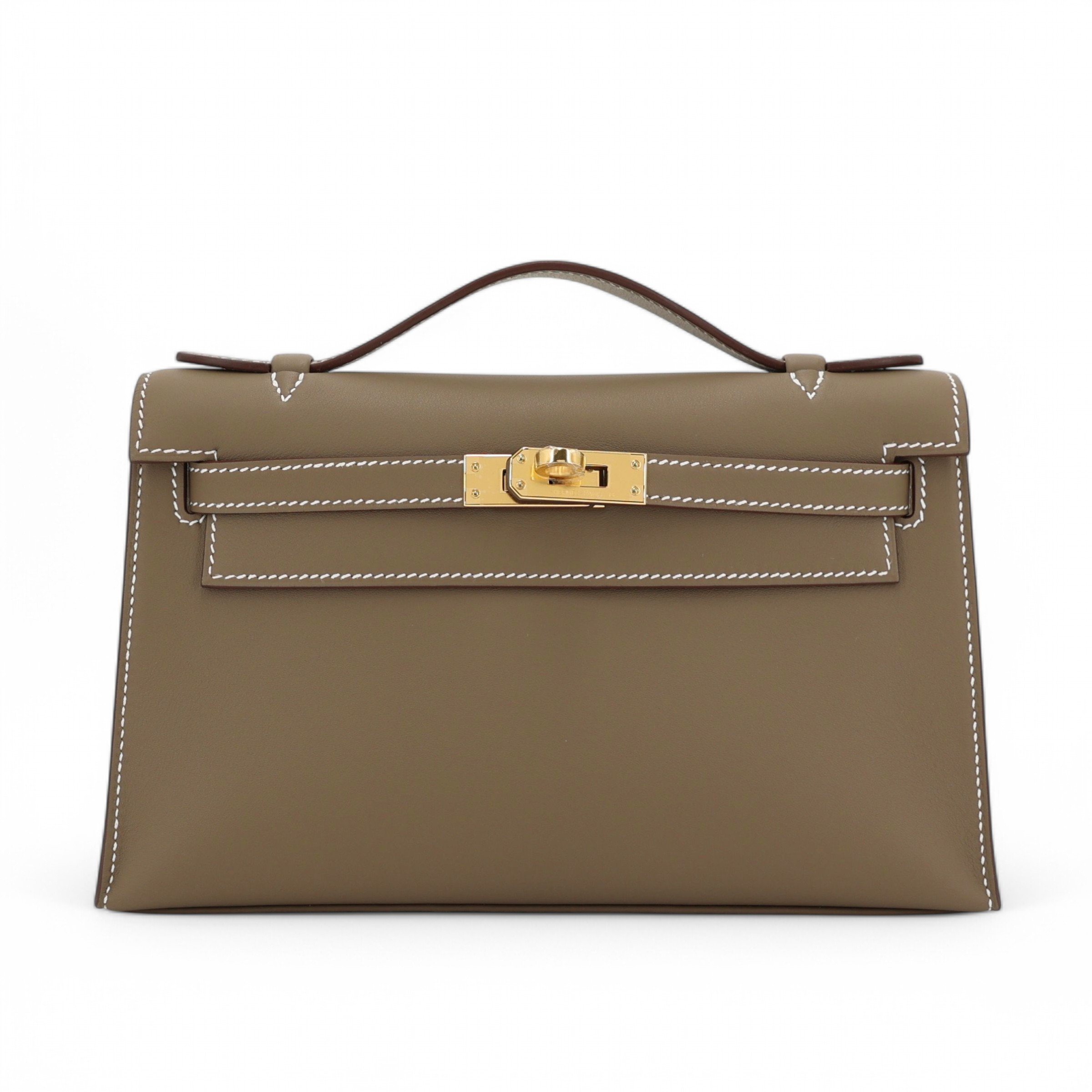
Hermès Kelly Pochette Guide →
The cross-shop if you want a tiny, high-visibility Hermès icon instead of a quiet zip shoulder bag.
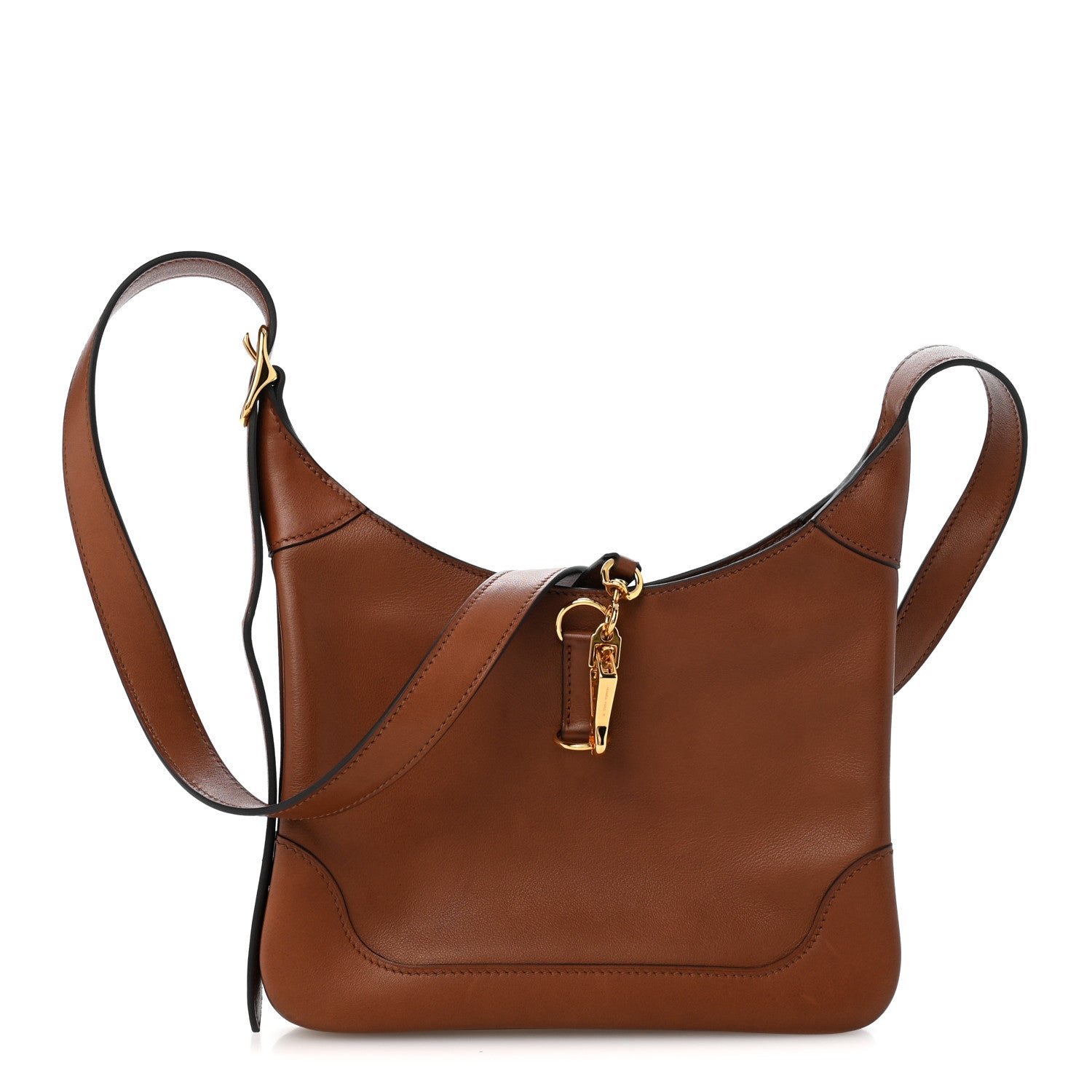
Hermès Trim Guide →
Another understated Hermès shoulder-bag family, but flatter and less zip-focused than the Massai.
Hermès Constance Guide →
Use this if you want the structured, hardware-forward alternative to the Massai's softer shape.
Hermès Jypsiere Guide →
The better comparison if your priority is a true Hermès messenger bag with more structure and more closure hardware.
Key Takeaways
- The Massai is best understood as a quiet archive shoulder bag: late-1990s in public framing, zip-top, close to the body, and much less visible than the obvious Hermès icons.
- The original and the Cut are not the same daily experience: the original wins on slouch, while the Cut usually wins on access.
- Pricing is friendlier than the bag's mystique suggests: current Cut 32 asks sit around $1.8k, and sold history often lands well below headline Hermès evening-bag pricing.
- Completeness matters: missing straps are one of the easiest ways to overpay for the wrong Massai listing.